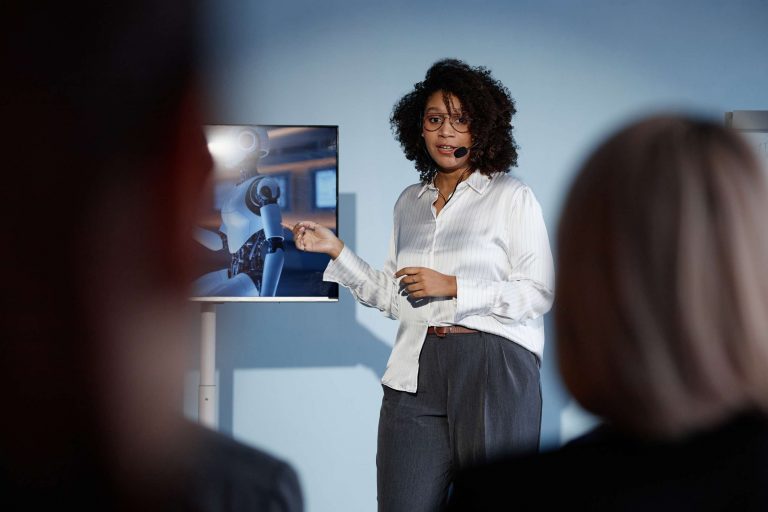
Confidence is often thought of as something you either have or don’t . But contemporary science and experiential learning is showing that confidence is a skill you can intentionally develop with practice, feedback, and self-reflection. Self-presentation is not just a matter of an outward appearance; it carries within itself the feeling of certainty and alignment with values. You can’t fake comfortable authority, whether or not you were born into a family that fostered it, and its true source — your strengths personality style, and hot buttons — yields only to authenticity.
Body language is a huge part of being confident with yourself. Minor changes in your posture, eye contact and body movements influence how you are perceived by others. Training to be confident with the body creates inner confidence and constancy, they reinforce each other with a feedback loop that allows self-assured communication to feel natural. This form radiates outside of the formal into daily interaction, since it helps professional relationships, connections in society, as well as personal transactions.
Voice is another essential component. As one varies tone, pace and volume as much is said as in the words. Paused and measured delivery imparts control and trust while rushed, erratic speech may inadvertently compromise credibility. Learning to hear vocal patterns and communicate intentionally enhances competence, presence, or both. With time, these skills also become so routine that conversation becomes natural and effortless.
Besides that, a fair amount of cognitive framing and mindset is involved. Confidence comes not only from external tricks but from an inner story that reinforces self-trust and a sense of being able to cope. When people come from curiosity and self-acceptance, they can coolly handle anything that’s thrown in their way. As learners are challenged to see self-doubt as learning, and mistakes not as failure but as feedback, they build a powerful form of confidence that is less reliant on forms of external validation, and more rooted in persistent effort.
Lastly, developing self-presentation skills are best fostered through guided reflection and progressive challenges. Those learning environments that offer feedback, guided exercises, and chances to use what’s been learned in real life situations will have a shorter time to develop. Repeated practice in safe, reflective contexts fosters confidence and generalizes to other settings including professional presentations or casual conversation. So confident self-presentation is really both a path and a skillset that brings together awareness, presence, voice and mindset as an integrated power to engage the journey of life with grace and honesty.